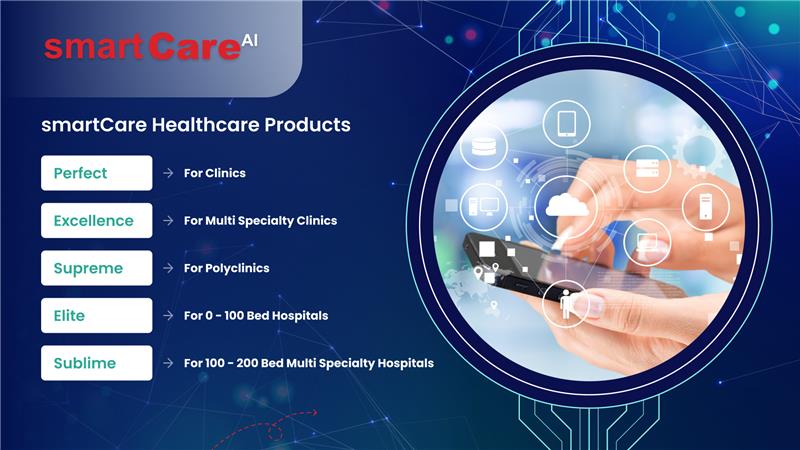
We deal with a new information technology generation that involves big data, internet of things (loT), cloud computing, and artificial intelligence to transform the conventional medical practices in an all-round way, making healthcare more efficient, more personalised, and more convenient. Smart healthcare services like smartHealth and smartTelehealth are utilising the technology that leads to better diagnosis, well-organised treatment plans, and devices that improve life quality, which can be adapted and are cost-effective.
At smartData, we understand that to keep pace with the technological advancements, the essence of reusability and scalability is manifold. On similar lines and using the latest technologies, we have built components of clinical care solutions that help health organisations and providers to manage their practice requirements efficiently. Our smartHealth solution is a SaaS-based platform for organisations with multi-locations that includes the following major features:
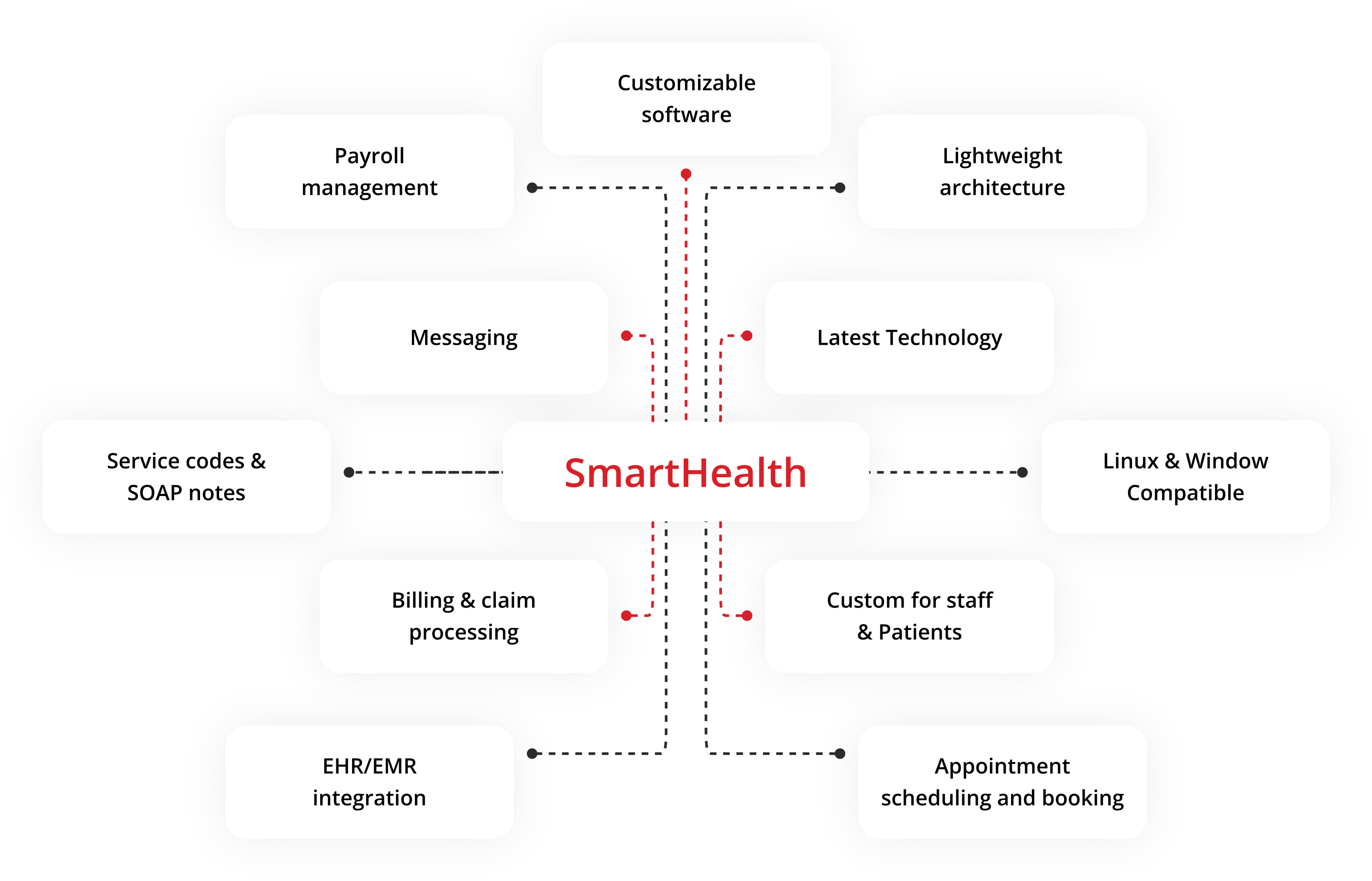
smartHealth- components of clinical care solutions | Telemedicine-EHR
CarSwap.me is a dynamic and interactive automotive marketplace designed to connect car owners looking to swap, sell, or trade vehicles with potential buyers or traders. The platform enhances the vehicle exchange process by providing seamless search and filtering options, detailed vehicle profiles, and direct communication between users.
Users can browse listed vehicles based on location, specifications, and owner preferences. Sellers can create profiles, upload vehicle details, and negotiate deals, while buyers can inquire, review vehicle history, and finalize transactions securely.
A child-focused health and safety wearable ecosystem designed for families, combining a smart wearable device with a companion mobile application. The platform enables parents to monitor essential health vitals and receive timely alerts while preserving children’s privacy through role-based access and features like Ghost Mode
This project focused on creating mapping reports to highlight geographic and linguistic disparities in OB/GYN service availability across Kansas. The objective was to provide visual evidence for healthcare researchers and policymakers to better understand provider distribution, identify underserved regions, and highlight language access barriers for Hispanic populations. The deliverables included static maps of provider clusters, Spanish-speaking access segmentation, and a custom symbolic visual to humanize the access challenge.